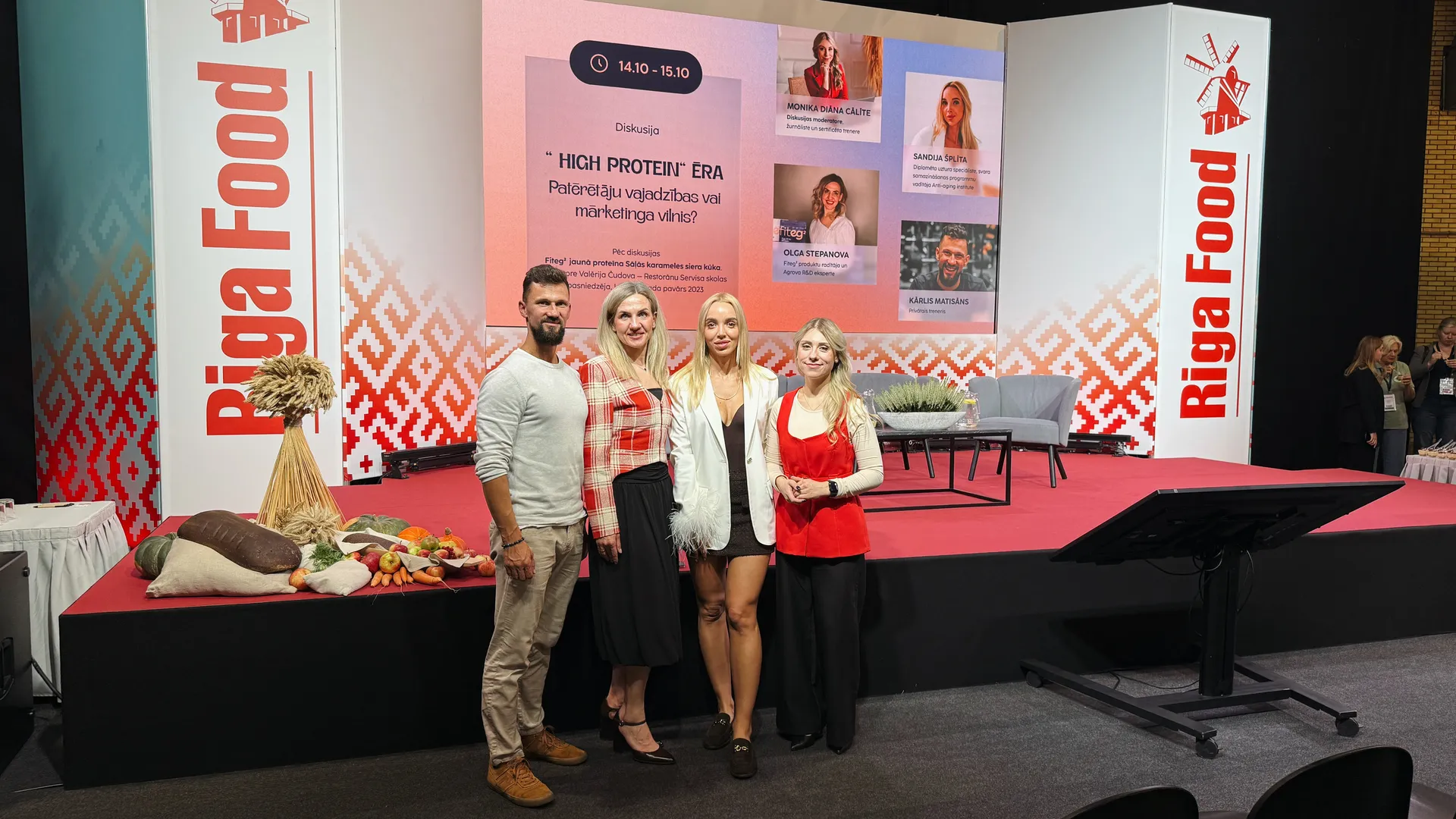
Products labelled “high in protein” have become one of the fastest-growing and most widely discussed food categories in recent years. But is this simply an effective marketing approach, or a well-founded healthy nutrition trend? A sociological survey commissioned by “Agrova Baltics”, part of the European agri-food group “Agrova”, and its functional egg protein brand “Fiteg²” reveals an interesting contradiction: while 72% of Latvia’s population understand what the “high in protein” label means, only 6% know precisely how much protein they need to consume as part of their daily diet. The study’s findings and their significance in the context of dietary habits are commented on by Olga Stepanova, creator of “Fiteg²” products and R&D expert at “Agrova”.
Protein popularity is growing faster than knowledge about it
The study shows that only 6% of respondents know precisely how much protein they need to consume daily. Another 31% believe they have an approximate understanding, while 62% of Latvia’s population overall do not have a clear idea of how much protein their bodies require. Of these, 38% admit that they do not know at all, while 24% say they have heard about the topic but cannot name a specific amount.
Knowledge also differs significantly across age groups – younger respondents are generally better informed, while older people are considerably more likely to admit that they do not know how much protein they should consume on a daily basis.
“The study clearly shows that ‘high in protein’ is not simply a marketing trick. It is a trend that reflects people’s growing interest in a balanced diet and higher-quality food products. At the same time, however, we can see that knowledge about the role of protein in the diet does not always keep pace with this interest. Many people still do not know how much protein they actually need or how to incorporate enough of it into their daily diet,” says O. Stepanova.
Protein products are not just for athletes
While 72% of respondents know that the “high in protein” label indicates a higher protein content than in similar products, some misconceptions about the purpose of these products still persist.
Some 12% of respondents cannot explain what the label means, while another 11% believe that such products are primarily intended for athletes.
O. Stepanova emphasises: “Protein is not only needed by professional athletes or people who regularly work out at the gym. It is one of the most important nutrients for everyone – children during periods of growth, adults with active lifestyles, seniors seeking to maintain muscle mass, people recovering from illness, and anyone who wants to maintain a balanced diet. Our task is to challenge the stereotype that protein products are intended only for a narrow audience.”
The “high in protein” label is no longer enough
The study shows that consumers are becoming increasingly demanding. When choosing protein products, people consider not only the amount of protein, but also the product’s ingredients, taste and price. This demonstrates that consumers are looking not for bold marketing claims, but for products that naturally fit into a healthy everyday diet.
“Being labelled ‘high in protein’ does not, in itself, make a product healthy. It is important to consider the overall composition – the source of protein, as well as the amount of sugar, fat and salt, and the product’s place within a balanced diet. This is also the approach we follow when developing the “Fiteg²” product range. Our goal is not to create products only for athletes, but to offer functional egg protein products to anyone who wants to easily supplement their diet with high-quality protein. The “Fiteg²” range currently includes egg protein powders and egg white protein bars, and we continue to expand the product range as we see that interest in functional nutrition in Latvia continues to grow,” says O. Stepanova.